
Tinnitus Recovery
Reclaim your life and find relief with evidence based CBT for Tinnitus
The hope of CBT & Habituation
My Story with Tinnitus
I have specialized in the treatment of Tinnitus as a qualified CBT therapist, following my own experience of extreme anxiety, depression and hopelessness for the future following the onset of Tinnitus in 2021.
Watch my story to learn about my struggle with Tinnitus, what Habituation is and how CBT supported me to return to my normal life, where I rarely even notice my Tinnitus!
Relief begins when the fight with tinnitus ends.
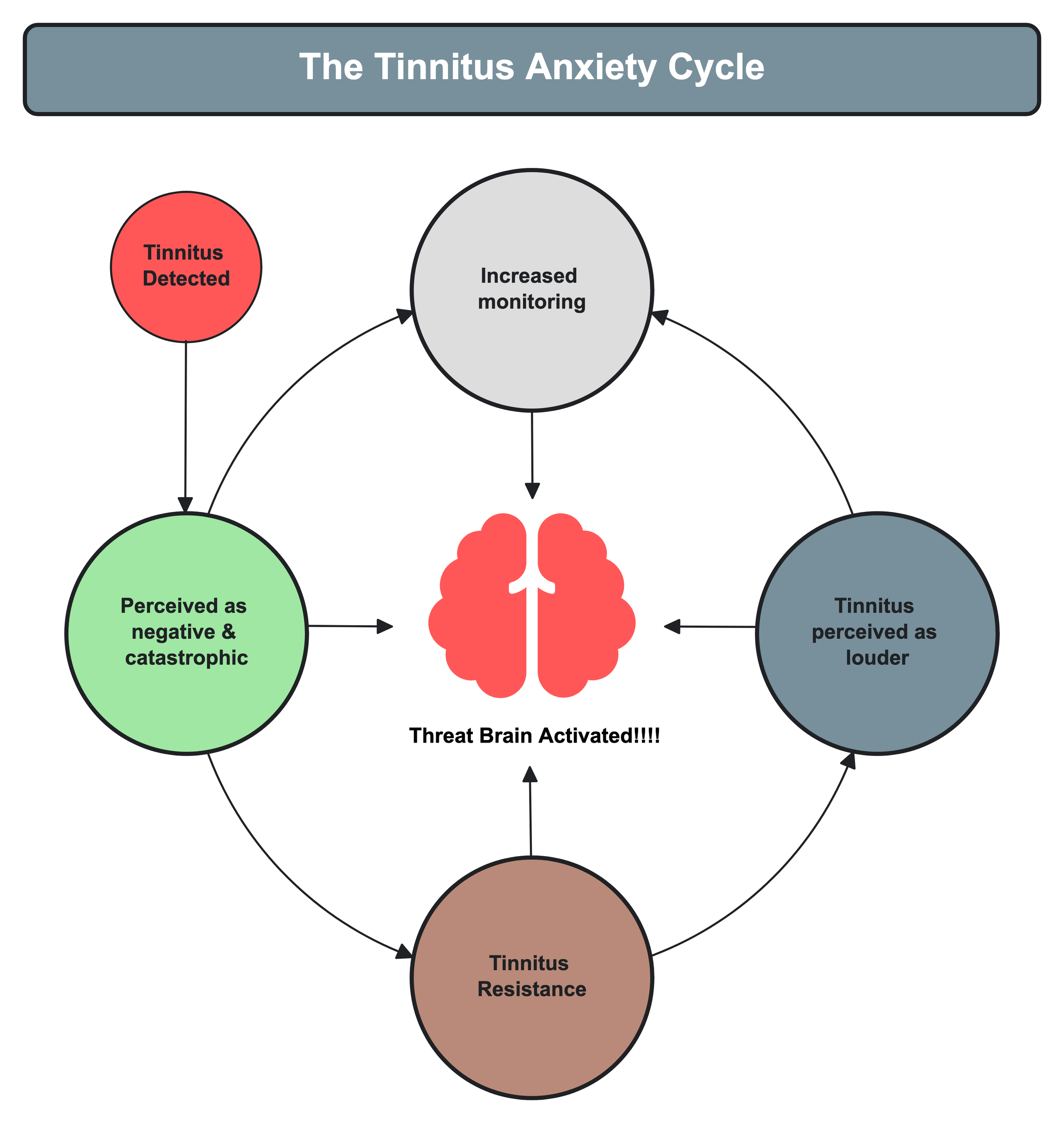
For many people, tinnitus becomes distressing not because of the sound itself, but because of the fear, attention, and constant effort to control or escape it. When anxiety takes over, the brain stays on high alert, making tinnitus feel louder and more intrusive. Therapy helps you change your response so the sound no longer dominates your life.
The Tinnitus Anxiety Cycle
You notice the sound
Worrying thoughts appear (“What if this never stops?”)
Anxiety and tension increase
You check and listen for the sound more
You resist the sound (avoidance or control)
Tinnitus feels louder and more overwhelming
How CBT Helps?
CBT helps break this cycle by calming the nervous system, changing unhelpful thinking patterns, and reducing the brain’s focus on tinnitus. Over time, the brain can habituate — meaning tinnitus becomes less noticeable and less emotionally distressing.
Learn how to reduce tinnitus-triggered anxiety
Reduced anxiety and distress
Less constant monitoring of tinnitus
Improved sleep and concentration
Reduced avoidance of sound and activities
Increased sense of control and confidence
Anyone can habituate to their Tinnitus, no matter the type of sound or volume.
What is the Tinnitus Recovery Program?
The Tinnitus recovery program is an online Cognitive Behavioural Therapy coaching program, which guides you through each step of evidenced based CBT, to support you to reduce anxiety and obtain a high level of habituation to your Tinnitus.

Cognitive Skills
Learn to identify, challenge, and replace unhelpful tinnitus-related thoughts. Reduce the brain’s threat response by changing the meaning you give to tinnitus.
Mindfulness & Relaxation
Rather than trying to block or fight the sound, you’ll learn ways to respond with less tension and fear, allowing the brain to gradually reduce how much attention it gives to tinnitus over time.
Changing Behaviours
Change common behaviours that unintentionally keep tinnitus feeling threatening. Gradually drop avoidance and checking behaviours linked to tinnitus.
Acceptance
Reduce the brain’s alarm response by letting tinnitus be present without resistance. Practice responding to tinnitus with openness rather than control or avoidance.
Gradual Exposure
Face feared tinnitus situations so the brain can learn the sound is not a threat. Build confidence by gradually confronting tinnitus-related fears and responses.
Sound Enrichment
Support habituation by reducing the brain’s focus on tinnitus through sound. Learn how to use sound confidently to feel less controlled by tinnitus.
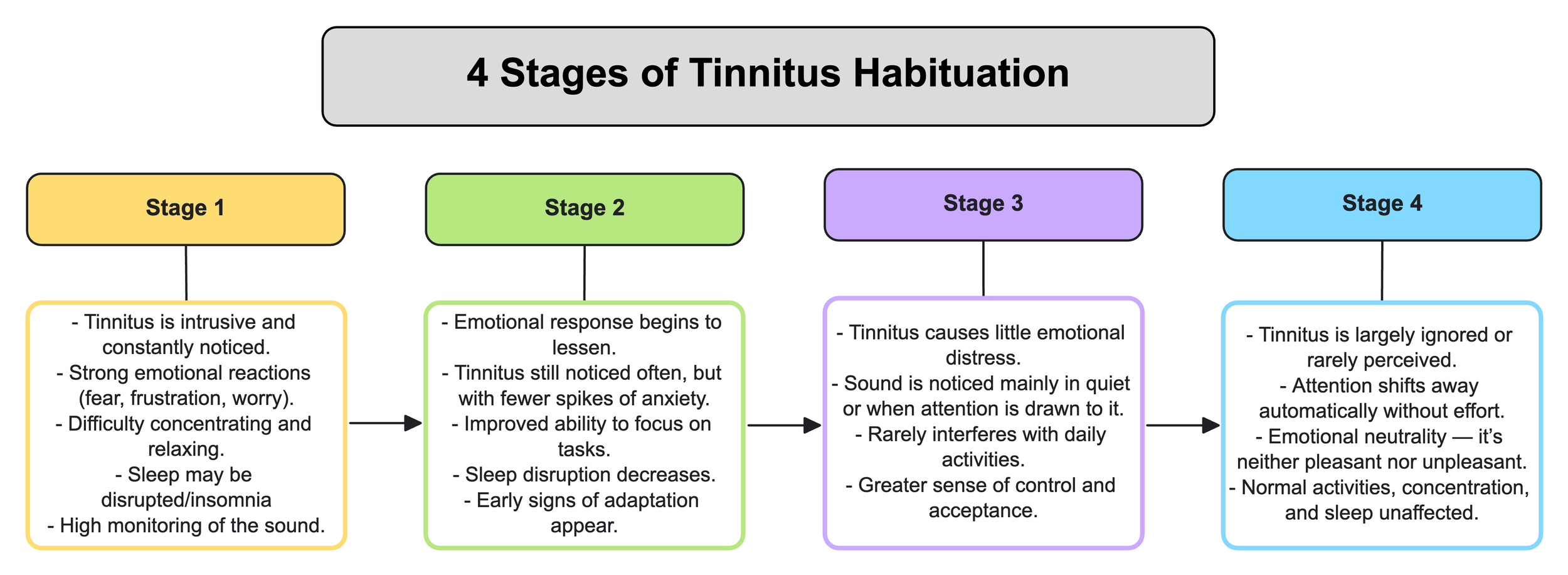
Stages of Habituation?
The Tinnitus Recovery program supports you to move through the 4 stages of Tinnitus habituation.
How to access support

Individual Support for Tinnitus Distress
1:1 online sessions provide personalised CBT-based coaching aimed at reducing tinnitus-related distress and supporting habituation over time.
The focus is on changing unhelpful responses to the sound, calming the nervous system, and building practical skills so tinnitus gradually becomes less intrusive in daily life.
Cost: CAD $200per hour.
Contact Us
Book a free 15 minute no obligation consultation to discuss how we might help.